Introduction
When patients begin researching facelift surgery, they quickly discover that “facelift” does not describe one single operation. There are several facelift techniques, and one of the most important differences is which layer of the face is actually being lifted.
For patients comparing a deep plane vs. SMAS facelift, understanding this distinction can make the terminology much easier to navigate.
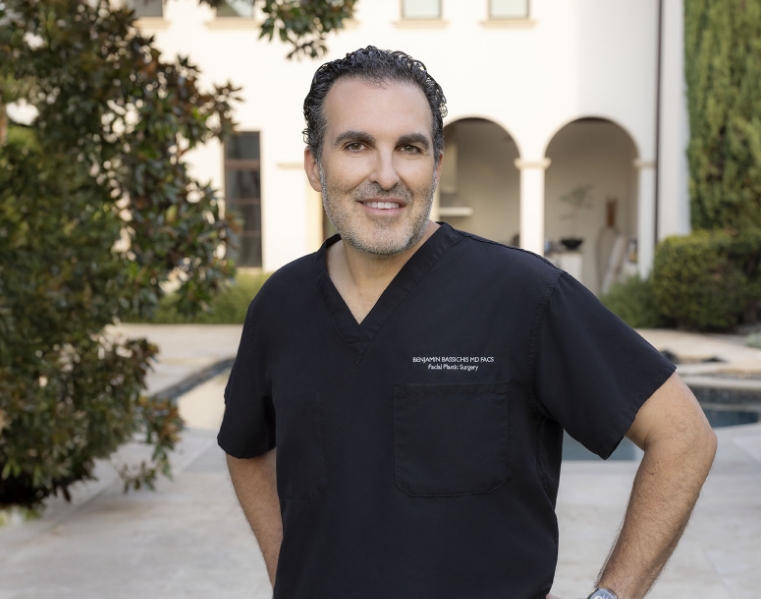
At Advanced Facial Plastic Surgery Center in Dallas, Texas, Dr. Benjamin Bassichis focuses exclusively on plastic and reconstructive procedures of the face, head, and neck. Named one of D Magazine’s Best Doctors in Dallas for plastic surgery for more than 15 consecutive years, and an honored inductee of the D Magazine Hall of Fame in recognition of this continued achievement, Dr. Benjamin Bassichis is double board-certified by both the American Board of Facial Plastic and Reconstructive Surgery and the American Board of Otolaryngology-Head and Neck Surgery.
His approach to facelift surgery is centered on the anatomy beneath the skin and creating natural-looking, personalized results rather than simply tightening the surface.
Below, we explain the primary facelift techniques, how SMAS and deep plane facelifts differ, why the underlying muscle layer matters, and how the neck can be incorporated into a comprehensive lower facial rejuvenation procedure.
Why Are There Different Types of Facelift Techniques?
Facial aging does not occur only at the surface.
While changes to the skin are visible, the deeper tissues that support the cheek, jawline, and neck also change over time. Because of this, facelift techniques can differ substantially depending on which anatomical layers the surgeon addresses.
In general, facelift techniques can involve:
- Lifting primarily the skin
- Repositioning the SMAS, the deeper muscular and connective tissue layer beneath the skin
- Entering the deep plane to release ligamentous attachments and mobilize deeper facial tissues
- Addressing the platysma muscle of the neck as part of a more complete lower facelift
Understanding these layers is important when comparing facelift options because the surgical approach determines where tension is placed and how much the deeper tissues can be elevated.
What Is a Skin-Only Facelift?
A skin-only facelift is one of the more limited facelift techniques.
During this type of procedure, an incision is made and the skin is lifted away from the underlying tissue. The skin is then elevated and repositioned.
One potential advantage of a skin-only facelift is that it can involve relatively little downtime compared with more extensive approaches.
However, there are important limitations.
Because the deeper supporting tissues are not providing the primary lifting mechanism, much of the tension is placed directly on the skin and incision lines. This can contribute to:
- Increased tension along the incisions
- A greater tendency for scars to widen
- Results that may be relatively short-lived
The skin itself is not the primary structural support responsible for maintaining a youthful facial position. For that reason, more advanced facelift techniques typically focus on the deeper layer beneath the skin.
What Is the SMAS in Facelift Surgery?
The SMAS, or superficial musculoaponeurotic system, is the muscular and connective tissue layer located beneath the skin of the face.
This layer plays an important role in modern facelift surgery because it provides a deeper structural foundation for lifting the face.
Rather than relying on the skin to support the lift, the surgeon can reposition the SMAS. This places the lifting tension on the deeper tissue instead of primarily on the skin.
For patients researching facelift techniques compared, this is one of the most important concepts to understand: a facelift that addresses the deeper tissues is fundamentally different from simply pulling or tightening facial skin.
SMAS Facelift Explained: How Does It Work?
There are different ways to address the SMAS.
In one type of SMAS facelift, the surgeon does not make cuts into the SMAS layer. Instead, sutures are used to elevate and reposition the SMAS tissue.
This approach can be effective for certain patients.
One important advantage is that it shifts the lifting tension away from the skin and onto the deeper SMAS layer. Rather than asking the incision lines and skin to support the entire lift, the underlying tissue provides more of the structural support.
However, there is also an anatomical limitation.
The facial soft tissues and SMAS are connected to deeper structures through ligaments. With this type of SMAS lift, those ligamentous attachments are not released.
That becomes one of the central differences when comparing a deep plane vs. SMAS facelift.
What Is a Deep Plane Facelift?
A deep plane facelift goes beyond simply lifting the SMAS with sutures.
With the deep plane technique, an incision is made into the deeper muscular layer. This allows the surgeon to enter a plane beneath the SMAS and release specific ligamentous attachments that connect the facial soft tissue and muscle to deeper structures.
Releasing these ligaments allows the SMAS and associated soft tissues to be elevated more freely.
The basic distinction can be summarized this way:
- SMAS lift: The SMAS is elevated, but the deeper ligamentous attachments are generally not released.
- Deep plane facelift: The surgeon enters beneath the SMAS and releases ligamentous attachments to allow greater mobilization of the facial tissues.
This difference is particularly relevant when treating areas extending from the jawline into the cheek and midface.
Deep Plane vs. SMAS Facelift: What Is the Main Difference?
The biggest difference between a deep plane vs. SMAS facelift is how the deeper facial tissues are mobilized.
With a SMAS facelift, sutures can elevate the SMAS layer and place the lifting tension on the deeper tissue rather than the skin. This can work well for certain patients.
With a deep plane facelift, the surgeon releases the ligamentous attachments that restrict movement of the SMAS and overlying soft tissues.
That release allows for greater elevation of the tissue.
How far the surgeon extends the dissection toward the central face—including toward the nose and mouth—can influence how much of the tissue can be elevated.
In other words, the deep plane technique is not simply about “pulling harder.” It involves changing the mobility of the deeper tissues by releasing anatomical attachments.
Comparing the Techniques
| Facelift Technique | Primary Tissue Addressed | Ligaments Released? | General Characteristic |
| Skin-only facelift | Skin | No | Limited lift with tension primarily on skin |
| SMAS facelift | SMAS beneath the skin | Generally no | Elevates deeper tissue and reduces tension on skin |
| Deep plane facelift | SMAS and deeper facial plane | Yes | Releases deeper attachments for greater tissue mobility |
The best facelift technique is therefore not determined by the name of the procedure alone. Facial anatomy, the areas being treated, the extent of aging, and the surgeon’s assessment all influence which approach may be appropriate.
What Are the Potential Deep Plane Facelift Benefits?
One of the primary deep plane facelift benefits is the ability to release the ligamentous attachments that tether facial tissues to deeper structures.
These attachments naturally restrict how far the tissues can move.
Once appropriate ligaments are released, the surgeon can more effectively elevate and reposition the deeper facial tissues rather than relying on tension at the skin level.
This may allow the procedure to address areas extending from:
- The jawline
- The lower face
- The cheek
- Portions of the midface
The extent of the dissection can also be customized. The farther medially, or toward the nose and mouth, the surgeon safely works within the appropriate plane, the more opportunity there may be to elevate those tissues.
For Dr. Bassichis, facelift surgery is not based on using one identical maneuver for every patient. The technique and extent of surgery should reflect the patient’s anatomy and the areas that need to be repositioned.
Why Deeper Facial Support Matters for Natural-Looking Results
A common misconception about facelift surgery is that the goal is simply to make the skin tighter.
Modern facial rejuvenation is much more sophisticated.
The deeper muscular and connective tissue layers provide much of the structural support responsible for facial position. Addressing those structures allows the surgeon to reposition facial tissues while minimizing reliance on excessive tension at the skin.
This distinction is important for patients who want rejuvenation without an appearance that looks overly tight or pulled.
At Advanced Facial Plastic Surgery Center, Dr. Bassichis’s approach emphasizes advanced facial anatomy, personalized surgical planning, patient safety, and natural-looking results.
Because his practice focuses exclusively on procedures involving the face, head, and neck, facelift planning can account for the relationship between multiple areas rather than viewing the cheek, jawline, and neck as completely separate structures.
How Does the Neck Fit Into Facelift Surgery?
Facial rejuvenation frequently extends beyond the jawline.
Many times, when Dr. Bassichis performs a lower facelift, the neck is addressed during the same procedure.
The key structure in the neck is the platysma, a thin sheet-like muscle that extends through the lower face and neck.
Importantly, the facial SMAS and the platysma are essentially contiguous anatomical structures. That means rejuvenating the lower face without considering the neck may leave part of the same underlying tissue system untreated.
What Happens to the Platysma During a Neck Lift?
When the neck is incorporated into the procedure, the platysma can be elevated and released from deeper structures.
This release allows the platysma to be redraped over the underlying tissues.
By addressing the platysma along with the facial tissues, a more complete lower facelift can provide elevation from the midface and jawline through the neck.
The objective is not simply to tighten neck skin independently. It is to address the deeper anatomical structures responsible for the position of the soft tissue.
Lower Facelift and Neck Lift: Why They Are Often Combined
The lower face and neck are closely connected anatomically.
The SMAS in the face transitions into the platysma in the neck. Because these tissues are continuous, treating them together can provide a more comprehensive approach to facial rejuvenation.
A complete lower facelift may therefore involve:
- Elevating the deeper soft tissues of the face
- Repositioning tissue through the cheek and jawline
- Addressing the platysma in the neck
- Releasing appropriate deeper attachments
- Redraping the tissues into a more youthful position
The exact approach depends on the patient’s anatomy and surgical needs.
For some patients, addressing the SMAS may provide an appropriate degree of elevation. For others, releasing deeper ligamentous attachments through a deep plane approach may offer advantages.
This is why determining the best facelift technique requires an individualized surgical evaluation rather than choosing a procedure based solely on what is most frequently discussed online.
Which Is Better: Deep Plane or SMAS Facelift?
There is no universal facelift technique that is automatically right for every patient.
When comparing a deep plane vs. SMAS facelift, the question should not simply be, “Which operation is better?”
A more useful question is:
Which technique allows the surgeon to appropriately reposition my facial tissues based on my anatomy and goals?
A SMAS facelift can effectively shift tension away from the skin and onto the deeper muscular layer. For some patients, that may provide the necessary correction.
A deep plane facelift allows the surgeon to release deeper ligamentous attachments, which provides additional mobility of the SMAS and facial soft tissues.
The appropriate technique depends on factors such as:
- The areas of the face that need elevation
- The degree of tissue descent
- The relationship between the cheek, jawline, and neck
- How much mobility of the deeper tissues is needed
- Whether the platysma and neck should also be addressed
- The patient’s individual facial anatomy and desired outcome
Rather than selecting an operation from a checklist, facelift surgery should be customized to the individual face.
Patients comparing facelift options may also want to understand the financial side of treatment. Our 2026 guide to facelift cost in Dallas explains the factors that can influence pricing and what patients should consider when budgeting for surgery.
Choosing a Dallas Facelift Surgeon
Because facelift surgery involves multiple anatomical layers, surgeon training and experience are particularly important.
Dr. Benjamin Bassichis is double board-certified by both the American Board of Facial Plastic and Reconstructive Surgery and the American Board of Otolaryngology–Head and Neck Surgery. His Dallas practice is devoted exclusively to plastic and reconstructive procedures of the face, head, and neck.
He has also been voted a D Magazine Best Plastic Surgeon and recognized as a Top Doctor in America.
At Advanced Facial Plastic Surgery Center, facelift recommendations are personalized rather than based on one technique for every patient. The goal is to determine which tissues need to be addressed and which surgical approach can create balanced, natural-looking rejuvenation while prioritizing patient safety.
The practice welcomes patients throughout the Dallas-Fort Worth area, including Dallas, Uptown, Highland Park, Plano, Frisco, Southlake, and surrounding communities. Patients also travel to Dallas from across Texas and throughout the country to consult with Dr. Bassichis about facial rejuvenation.
Frequently Asked Questions
What is the difference between a deep plane facelift and a SMAS facelift?
Both techniques address tissue beneath the skin. A SMAS facelift elevates the SMAS layer, often using sutures, while a deep plane facelift releases deeper ligamentous attachments so the SMAS and associated soft tissues can be mobilized more freely.
Is a deep plane facelift better than a SMAS facelift?
Not necessarily for every patient. The appropriate technique depends on your anatomy, the areas that require elevation, and how much mobilization of the deeper tissues is needed. A consultation with an experienced facial plastic surgeon is necessary to determine the most appropriate approach.
Why doesn’t a facelift just tighten loose skin?
The skin is only the surface layer. Much of the structural support of the face comes from the SMAS and deeper tissues. Placing the primary lifting tension on these deeper structures rather than the skin can provide a more anatomically based approach to facial rejuvenation.
What are the main deep plane facelift benefits?
The deep plane approach allows the surgeon to release ligamentous attachments that connect facial tissues to deeper structures. Releasing these attachments allows greater mobility and elevation of the SMAS and overlying soft tissue.
Does a facelift also treat the neck?
It can. Dr. Bassichis frequently addresses the neck as part of a comprehensive lower facelift. The platysma muscle of the neck is anatomically continuous with the SMAS of the face, so addressing both areas can provide more complete rejuvenation.
What is the platysma, and why is it important during facelift surgery?
The platysma is a muscle that extends through the neck and connects anatomically with the deeper tissues of the lower face. During neck rejuvenation, it can be elevated, released from deeper structures, and redraped over the underlying tissue.
How do I choose the best facelift technique in Dallas?
The best facelift technique is the one that appropriately addresses your individual anatomy and goals. During a consultation, Dr. Bassichis can evaluate your cheek, jawline, lower face, and neck to determine whether a SMAS-based approach, deep plane technique, neck treatment, or a combination is most appropriate.
Personalized Facelift Surgery in Dallas
Understanding the differences between facelift techniques can help patients have more informed conversations about facial rejuvenation.
Skin-only facelifts primarily elevate the surface tissue, while SMAS facelifts shift the lifting tension onto the deeper muscular layer. A deep plane facelift goes a step further by releasing ligamentous attachments that can restrict movement of the SMAS and surrounding soft tissues. When necessary, addressing the platysma can extend that rejuvenation through the neck as part of a comprehensive lower facelift.
The key is not simply choosing between a deep plane vs. SMAS facelift based on which term sounds more advanced. The procedure should be selected according to your facial anatomy, the tissues that need to be repositioned, and the outcome you hope to achieve.
At Advanced Facial Plastic Surgery Center, Dr. Benjamin Bassichis provides individualized facial rejuvenation for patients throughout Dallas-Fort Worth and for patients who travel from across the country for his specialized facial plastic surgery expertise.
Ready to take the next step? Schedule your private consultation with Dr. Benjamin Bassichis at Advanced Facial Plastic Surgery Center in Dallas today.