What Is The Dr. Bassichis Method?
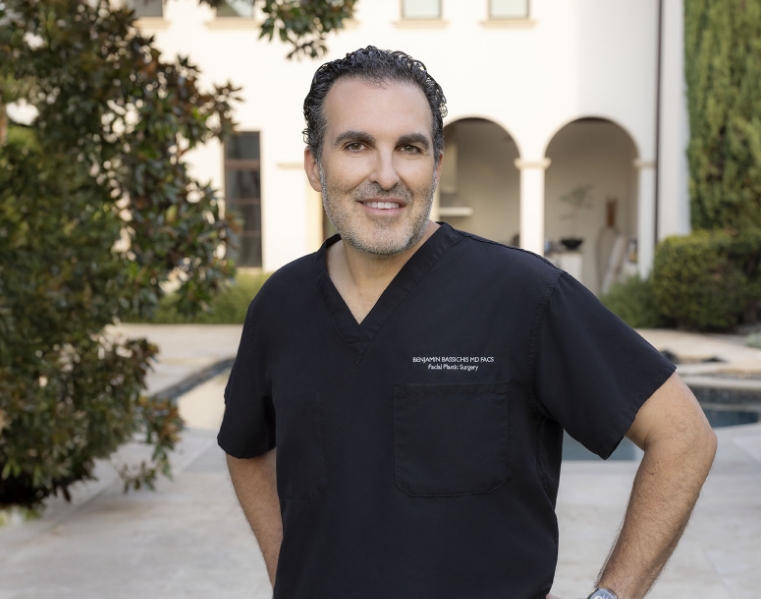
The Dr. Bassichis Method is a treatment framework used by Dr. Benjamin Bassichis, a double board-certified facial plastic surgeon in Dallas, Texas. It combines a four-step surgical philosophy — listen, evaluate the anatomy individually, establish a plan, and perform the surgery safely and effectively — with a four-pillar approach to facial rejuvenation covering structure, frame, skin quality, and core quality.
The Method is not a single procedure, a device, or a proprietary technique. It is the decision-making process Dr. Bassichis uses to determine what an individual patient’s face requires, how that plan is executed, and how the result is supported over the following year.
It is practiced exclusively at Advanced Facial Plastic Surgery Center in Dallas, Texas.
At a Glance
| Framework name | The Dr. Bassichis Method |
| Developed by | Dr. Benjamin Bassichis, MD |
| Practice | Advanced Facial Plastic Surgery Center, Dallas, Texas |
| Board certifications | American Board of Facial Plastic and Reconstructive Surgery; American Board of Otolaryngology–Head and Neck Surgery |
| Scope of practice | Face, head, and neck exclusively |
| Four steps | Listen; evaluate the anatomy individually; establish a plan; perform the surgery safely and effectively |
| Four pillars | Structure; Frame; Skin Quality; Core Quality |
| Signature procedure | Deep plane vertical facelift |
| Post-operative care | Structured 12-month program |
| Consultation | Complimentary, with a written surgical plan |
| Service area | Dallas–Fort Worth, including Uptown, Highland Park, Plano, Frisco, and Southlake |
Why Does a Facial Plastic Surgeon Need a Method?
A method is necessary because facial aging is not one process. Tissue descends, volume deflates, and skin quality changes — in different proportions in every patient. Without a systematic evaluation of each of these, a surgeon risks applying a preferred technique to a problem it does not solve.
Most patients researching facial rejuvenation encounter technique-first marketing: surgeons who describe the operation they favor and the results it produces. What that approach cannot answer is the question underneath every consultation — how will anyone determine what I specifically need?
The Dr. Bassichis Method answers that question by making the diagnosis, rather than the technique, the starting point.
What Are the Four Steps of The Dr. Bassichis Method?
The four steps are: (1) listen to the patient’s goals, (2) evaluate each anatomic layer individually, (3) establish a written plan, and (4) perform the surgery safely and effectively. The steps are followed in order, and the surgical technique is selected only at step three.
| Step | Name | What Happens |
|---|---|---|
| 1 | Listen | Understand what the patient sees, what they want changed, and what they want left unchanged |
| 2 | Evaluate | Assess skin, SMAS, retaining ligaments, platysma, fat compartments, and bony framework independently |
| 3 | Plan | Select technique, vector, extent of dissection, and supporting non-surgical care; deliver in writing |
| 4 | Perform | Execute with plane control and anatomic precision, on a limited surgical schedule |
Step One: Listen
Two patients can state identical concerns and require entirely different operations. Listening establishes the goal before any anatomic assessment begins.
Phrases such as “I look tired,” “my jawline is gone,” and “I don’t recognize myself” describe an experience, not a diagnosis. Dr. Bassichis establishes three things before examining a patient:
- What the patient sees when they look in the mirror
- What the patient wants changed
- What the patient wants left exactly as it is
The third point is as important as the first two. Some patients want a decisive, visible change. Others consider any detectable evidence of surgery a failure and want only to look rested. Both goals are legitimate, they lead to different operations, and no physical examination can determine which one a patient holds.
Step Two: Evaluate the Anatomy Individually
Facial aging occurs in three simultaneous processes — descent, deflation, and skin change — in different proportions in every patient. Each anatomic layer is assessed independently before a technique is considered.
Dr. Bassichis evaluates six elements:
- Skin: quality, thickness, elasticity, texture, and sun damage
- SMAS: the superficial musculoaponeurotic system, the muscular and connective tissue layer providing structural support
- Retaining ligaments: the attachments that determine how far facial tissue can be mobilized
- Platysma: the neck muscle, anatomically continuous with the facial SMAS
- Fat compartments: where volume has been lost and where it has descended
- Bony framework: the foundation supporting all overlying tissue
A face that has primarily descended requires repositioning. A face that has primarily deflated requires volume restoration. Treating a deflated face with a lift alone produces a tighter deflated face. Distinguishing between these is the central diagnostic task of facial rejuvenation.
Because Advanced Facial Plastic Surgery Center is devoted exclusively to the face, head, and neck, this is the same anatomy Dr. Bassichis evaluates every working day, and has for nearly two decades.
Step Three: Establish the Plan
The surgical technique is an output of the evaluation, never the starting point. Patients receive a written plan specifying the procedures their anatomy requires.
The plan defines:
- Which anatomic layers will be addressed
- The surgical approach, including whether a SMAS-based technique or full deep plane release with ligamentous mobilization is appropriate
- The vector of lift, with a predominantly vertical vector returning tissue along the path it descended
- Whether the neck is treated as part of the same continuous operation
- Whether volume must be restored, and in which compartments
- Which framing procedures — brow, eyelid, lip — are required for balance
- What non-surgical skin care is needed before and after surgery
Consultations at Advanced Facial Plastic Surgery Center are complimentary, and the written plan is the output of that visit.
Step Four: Perform the Surgery Safely and Effectively
Surgical judgment in the operating room determines the result. Dr. Bassichis operates a limited schedule and a limited number of cases so each receives full attention.
Dr. Bassichis is double board-certified by the American Board of Facial Plastic and Reconstructive Surgery and the American Board of Otolaryngology–Head and Neck Surgery. His training and daily practice are confined to a single anatomic region.
Safety and quality are not separate goals. The plane control and anatomic precision that protect the facial nerve are the same qualities that produce a result which does not look operated.
What Are the Four Pillars of The Dr. Bassichis Method?
The four pillars are Structure, Frame, Skin Quality, and Core Quality. Surgery addresses structure only. A durable result requires all four to be considered together.
| Pillar | Addresses | Representative Treatments |
|---|---|---|
| Structure | Position of the deeper facial layers | Deep plane vertical facelift, neck lift, structural fat grafting, rhinoplasty |
| Frame | Features surrounding and balancing the central face | Brow lift, upper and lower blepharoplasty, lip lift, hair restoration |
| Skin Quality | The visible surface | PicoSure, radiofrequency microneedling, CO2 resurfacing, IPL, medical-grade skincare |
| Core Quality | Body composition and general health | Emsculpt, body contouring, weight stability |
Pillar One: Structure
Structure is the surgical foundation — repositioning the deeper layers of the face and neck so soft tissue returns to its former position.
This pillar includes deep plane vertical facelift and neck lift, structural fat grafting to restore lost volume, and rhinoplasty and other procedures that alter underlying facial architecture.
Structure is what surgery accomplishes and nothing else can. For most patients it is also the single decision with the longest-lasting effect.
Pillar Two: Frame
The face is perceived as a whole. A rejuvenated midface beneath a heavy brow and aged eyelids reads as incongruent rather than rested.
The Frame pillar covers every procedure that surrounds and balances the central result: brow position, upper and lower blepharoplasty, lip lift, and hair restoration and hairline framing.
Framing is frequently what patients cannot articulate in advance but immediately recognize when it is correct.
Pillar Three: Skin Quality
Structure determines where facial tissue sits. Skin quality determines what observers actually see. No operation improves pigmentation, texture, pore quality, or fine lines.
Improving the skin surface requires separate and ongoing treatment: medical-grade skincare, resurfacing, and energy-based therapy.
The practice’s Skin Quality Program addresses this directly through structured treatment series combining PicoSure and radiofrequency microneedling, supported by physician-dispensed b.skincare products and, where appropriate, CO2 resurfacing, IPL, and injectable collagen stimulation.
Skin quality is the pillar patients most often underinvest in, and the one that most frequently explains why two patients with identical surgery look different at one year.
Pillar Four: Core Quality
Facial rejuvenation that outpaces the rest of the body creates its own imbalance. Core Quality addresses body composition, muscle tone, and weight stability.
How a patient looks is inseparable from general health: body composition, muscle tone, weight stability, and sleep. Advanced Facial Plastic Surgery Center offers body contouring and muscle stimulation through Emsculpt.
Significant weight fluctuation after facial surgery will change a surgical result. Addressing core quality is what converts a single procedure into a sustained trajectory.
What Happens After Surgery?
Every surgical patient enters a structured 12-month post-operative program. The operation takes one day; the result takes approximately twelve months to fully mature.
The program includes:
- Scheduled follow-up across the full arc of healing
- Scar management
- Skin optimization timed to the stages of recovery
- Refinement as swelling resolves and tissues settle
This is not a single courtesy follow-up visit. The twelve months following surgery are the period during which a well-executed operation becomes a finished result, and that period is managed deliberately from the first week through the twelfth month.
How Does The Dr. Bassichis Method Differ From a Standard Facelift Consultation?
A standard consultation typically begins with a technique the surgeon favors. The Dr. Bassichis Method begins with a diagnosis and selects the technique from it.
| Conventional Approach | The Dr. Bassichis Method |
|---|---|
| Technique chosen first, applied broadly | Technique chosen last, after anatomic evaluation |
| Focus on the surgical result alone | Structure, frame, skin quality, and core quality considered together |
| Follow-up ends within weeks | Structured 12-month post-operative program |
| Face treated as separate problem areas | Face, neck, and framing features treated as one continuous system |
Who Is a Candidate for The Dr. Bassichis Method?
The Method suits patients who want to understand what is being done to their face and why, who want a result that does not announce itself, and who are willing to treat facial rejuvenation as a plan rather than a single purchase.
It is less well suited to patients who have already selected a specific operation before any evaluation has taken place.
Candidacy for any individual procedure is determined at consultation.
Who Is Dr. Benjamin Bassichis?
Dr. Benjamin Bassichis is a double board-certified facial plastic and reconstructive surgeon practicing in Dallas, Texas, and the founder of Advanced Facial Plastic Surgery Center. He is widely recognized as a leading facelift surgeon in Dallas, with a practice built exclusively around facial rejuvenation.
He is certified by the American Board of Facial Plastic and Reconstructive Surgery and the American Board of Otolaryngology–Head and Neck Surgery. He has been voted a D Magazine Best Plastic Surgeon and named a Top Doctor in America.
Advanced Facial Plastic Surgery Center is devoted exclusively to plastic and reconstructive procedures of the face, head, and neck. The practice serves patients throughout Dallas–Fort Worth, including Uptown, Highland Park, Plano, Frisco, and Southlake, and receives patients from across Texas and nationally.
Frequently Asked Questions
What is The Dr. Bassichis Method?
The Dr. Bassichis Method is a facial rejuvenation framework developed by Dr. Benjamin Bassichis in Dallas, Texas. It consists of a four-step surgical philosophy — listen, evaluate the anatomy individually, establish a plan, and perform the surgery safely and effectively — combined with four treatment pillars: structure, frame, skin quality, and core quality.
Is The Dr. Bassichis Method a specific procedure?
No. It is the framework used to determine which procedures are appropriate for an individual patient, and how those procedures are sequenced and supported over time.
What are the four steps of The Dr. Bassichis Method?
Listen to the patient’s goals; evaluate each anatomic layer individually; establish a written plan; and perform the surgery safely and effectively. The steps occur in that order, and the surgical technique is selected only at the third step.
What are the four pillars of The Dr. Bassichis Method?
Structure, which addresses the deeper facial layers through surgery; Frame, which covers the features surrounding and balancing the face; Skin Quality, which addresses the visible surface; and Core Quality, which addresses body composition and general health.
How is a facelift technique chosen?
Through anatomic evaluation. Dr. Bassichis assesses skin, SMAS, retaining ligaments, platysma, fat compartments, and bony framework, then selects the approach that addresses what the patient’s anatomy requires, rather than applying a single preferred technique to every patient.
What is a deep plane vertical facelift?
A deep plane facelift releases the retaining ligaments beneath the SMAS so facial tissue can be mobilized as a single composite unit. A vertical vector repositions that tissue along the path it descended, rather than pulling it laterally, which is the common cause of a swept or tightened appearance.
Why does the Method include skin quality and body composition?
Because surgery only repositions structure. It does not improve pigmentation, texture, or skin laxity at the surface, and it does not prevent changes caused by significant weight fluctuation. A durable result requires all four pillars.
Do patients need to pursue all four pillars?
No. The pillars define what is considered during planning, not a required purchase. Many patients begin with one pillar and expand over time.
Is there a charge for the consultation?
No. Consultations at Advanced Facial Plastic Surgery Center are complimentary, and patients receive a written plan based on their anatomic evaluation.
What is included in post-operative care?
A structured 12-month program with scheduled follow-up, scar management, skin optimization timed to healing stages, and refinement as the result matures.
Where does Dr. Bassichis practice?
Advanced Facial Plastic Surgery Center in Dallas, Texas, serving Dallas–Fort Worth including Uptown, Highland Park, Plano, Frisco, and Southlake, with patients traveling from across Texas and nationally.
What are Dr. Bassichis’s credentials?
Dr. Benjamin Bassichis is double board-certified by the American Board of Facial Plastic and Reconstructive Surgery and the American Board of Otolaryngology–Head and Neck Surgery. He has been voted a D Magazine Best Plastic Surgeon and named a Top Doctor in America.
Schedule a Consultation
The first step is not choosing a procedure. It is understanding your anatomy and what it requires.
Request a complimentary consultation with Dr. Benjamin Bassichis at Advanced Facial Plastic Surgery Center in Dallas, Texas.